The Shifting Tides: Why California Condos Need Flood Protection More Than Ever
You bought your condo in California, maybe for the sunshine, the community, the ease of maintenance. You probably thought about earthquakes, sure, but floods? In a condo? Many people just don’t connect those dots. But honestly, it’s a growing concern for condo owners across our beautiful, yet unpredictable, state. If you feel a bit confused, or even a little scared by the headlines about wild weather, you’re not alone. It’s perfectly natural to worry about protecting your home and everything in it.
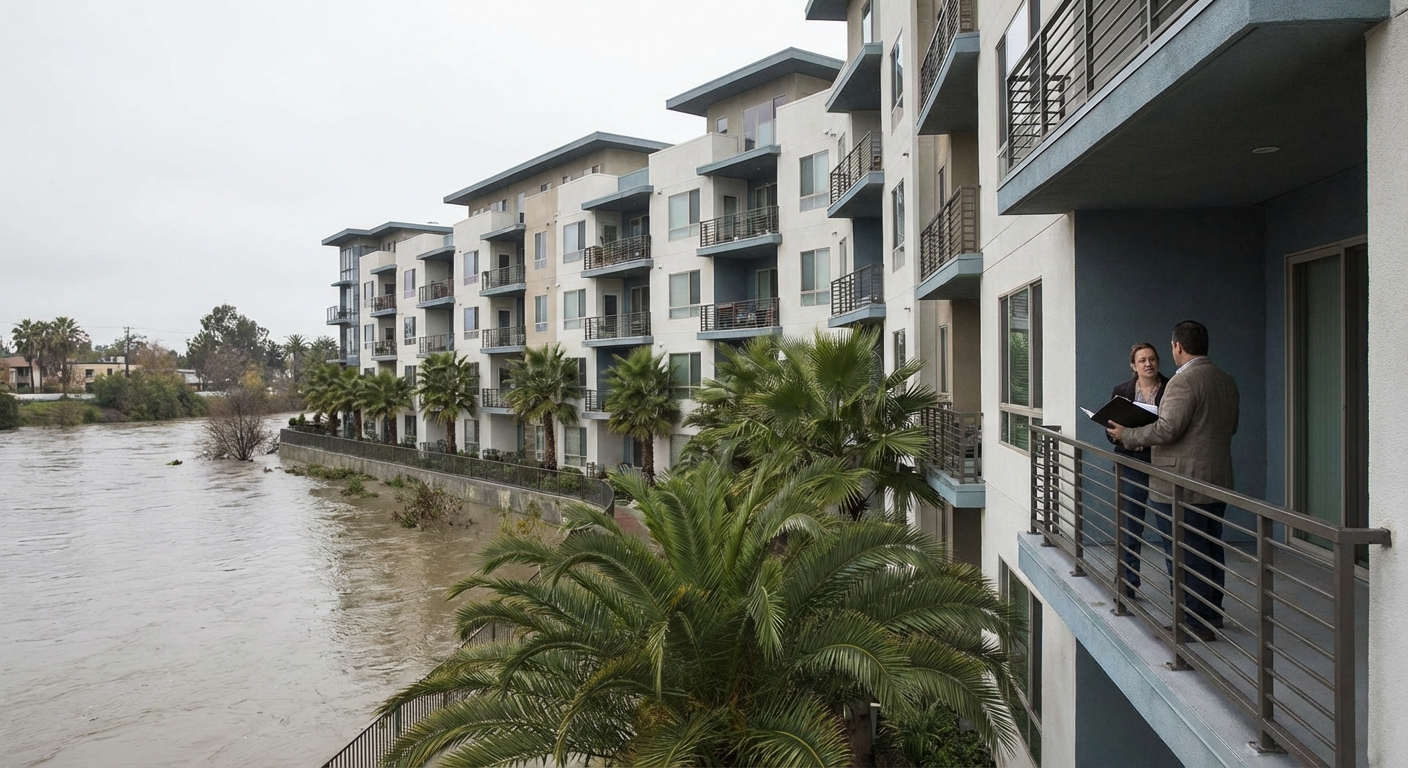
California’s weather patterns have been anything but predictable lately. We see atmospheric rivers drenching areas that historically dealt with drought. The ground gets so dry, it can’t absorb water fast enough. Then comes the deluge, and suddenly, streets become rivers. Places like Ventura County, parts of the Inland Empire, or even neighborhoods in the Valley that never saw much water, now find themselves dealing with rising levels. You might think, “I’m not near a river,” or “My condo is on the second floor.” The truth is, flood damage can happen in unexpected ways, even for condo dwellers. And here’s where it gets interesting. Many condo owners assume their HOA master policy covers everything. That’s not always the case, especially when it comes to flood damage inside your unit.
What “Flood” Really Means for Your Condo
For insurance companies, a “flood” isn’t just about a river spilling its banks. It’s a specific definition. Generally, it means a temporary condition of partial or complete inundation of two or more acres of land that’s normally dry, or of two or more properties, one of which is yours. This can be from an overflowing body of water, rapid accumulation of surface water, mudflow, or even a storm surge along the coast. It’s a big difference from a burst pipe in your wall, which is typically covered by your standard condo insurance. Flood insurance is for water that comes from *outside* your building and enters your unit.
Think about it. Imagine heavy rain that overwhelms the storm drains on your street. Water starts pooling, then seeping into ground-floor units. Or maybe an underground parking garage fills up, and the water eventually backs up into units above. That’s a flood. Your personal belongings – your furniture, your electronics, your clothes – can be ruined. The drywall, the flooring, the cabinets you installed – all gone. These are the parts of your condo that *you’re* usually responsible for, not the HOA.

The HOA Master Policy: A Common Misunderstanding
This is where a lot of condo owners get tripped up. Most HOA master policies are designed to cover the common areas of the building – the roof, the exterior walls, the hallways, the lobby. They also cover the building’s main structure. Some HOAs have what’s called a “bare walls-in” policy, meaning they cover the structure up to the bare walls of your unit. Others have “all-in” policies, which might cover some original fixtures within your unit, like standard cabinets or basic flooring.
But here’s the thing. Even if your HOA has an “all-in” policy, it almost certainly won’t cover your personal property if a flood occurs. And many master policies have enormous deductibles for flood damage. We’re talking tens of thousands of dollars, sometimes even hundreds of thousands. If the HOA has to pay that deductible, guess who gets hit with a special assessment? You do. Suddenly, you’re paying out of pocket for the HOA’s flood damage *and* your own unit’s interior damage. That’s a double whammy nobody wants.
Getting Your Own Flood Policy: The NFIP and Private Options
So, what’s a condo owner to do? The primary source for flood insurance in the United States has long been the National Flood Insurance Program (NFIP), which is run by FEMA. You can get an NFIP policy through many insurance companies, but the coverage limits are set by the government: up to $250,000 for the building structure and up to $100,000 for your personal belongings. For many California condo owners, especially those with high-value finishes or a lot of personal property, those limits might not feel like enough.
That’s not the whole story. In recent years, private flood insurance has really stepped up, especially here in California. These private policies are offered by various insurers and can sometimes provide higher coverage limits, different deductible options, and occasionally, even more competitive rates for certain properties. They might also offer coverage that’s a bit broader than NFIP policies. It’s certainly worth exploring both avenues to see which one fits your specific needs and budget best.
How Flood Zones Affect Your Condo’s Premium
You’ve probably heard about flood zones, right? Those maps FEMA draws up, showing areas at different levels of risk. And yes, being in a high-risk flood zone (like an AE or VE zone) definitely impacts your flood insurance premium. But wait — a few years ago, the NFIP introduced a new pricing methodology called Risk Rating 2.0. This changed everything.
It used to be that your flood zone was almost the *only* factor. Now, it’s far more granular. Risk Rating 2.0 looks at your specific property’s characteristics. Things like the elevation of your building’s lowest floor, the type of foundation, how close you are to water sources, and even the cost to rebuild your particular structure. So, if your condo is on the third floor of a sturdy building in a moderate flood zone, your premium might look very different than a ground-floor unit in the same zone. This is why some premiums jumped, and others went down. We’ve seen some premiums for certain California properties increase by 40% or more between 2022 and 2024, reflecting these new risk calculations. It’s a more accurate, but sometimes more expensive, way of pricing risk.
The Cost of Peace of Mind: What Drives Premiums
Nobody wants to pay for insurance they hope they’ll never use. But living in California, we’ve learned the hard way that “hope” isn’t an insurance policy. The cost of flood insurance, like most insurance here, can feel like a moving target. Several factors really drive those premiums up or down.
First, your location is a big one. Even with Risk Rating 2.0, proximity to known flood hazards still plays a role. Then there’s the elevation of your specific unit. If you’re on the ground floor, your risk is inherently higher than someone on the fifth floor. Your choice of deductible also matters – a higher deductible usually means a lower premium, but you’ll pay more out of pocket if you have a claim. And, of course, the amount of coverage you choose for your building (if applicable) and your contents will impact the price.
It’s also important to remember the broader context of insurance in California. We’ve seen major carriers like State Farm, AAA, and Farmers pull back or severely restrict new policies in the homeowner’s market, often citing wildfire risk and rising rebuilding costs. While flood insurance is a separate beast, the overall trend of increasing property risk and higher costs to repair or rebuild impacts every corner of the insurance market. It’s a challenging time, and it’s why having an expert on your side makes a real difference.
Don’t Wait for the Water: How to Get Covered
This isn’t a policy you can buy the day before a storm hits. Most flood insurance policies, especially through the NFIP, have a 30-day waiting period before coverage goes into effect. Private flood policies might have shorter waiting periods, but it’s rarely instant. This means you need to plan ahead.
Honestly, the best step you can take is to talk to an independent insurance agent. Someone who isn’t tied to just one company. They can look at your specific condo, understand your HOA’s master policy, and then compare options from both the NFIP and various private insurers. They can help you figure out the right coverage limits for your personal property and the interior finishes of your unit.
Ready to explore your options? Get a personalized flood insurance quote for your California condo today. Visit condoinsurancecalifornia.com/quote/.
Karl Susman, from Condo Insurance California (CA License #OB75129), has been helping California residents navigate these complex waters for years. He and his team understand the unique challenges condo owners face. You can reach them at (877) 411-5200 for a conversation that cuts through the confusion.
A Note on Earthquake Coverage
It’s easy to mix these up. In California, we’re constantly thinking about earthquakes. But flood insurance and earthquake insurance are two entirely separate policies. Your flood policy won’t cover damage from an earthquake, even if the earthquake causes a flood (like a dam breaking). And your earthquake policy won’t cover water damage unless it’s directly caused by the earth shaking. They’re different risks, requiring different protection. So, make sure you’re clear on which one you’re asking about when you’re seeking coverage.
Protecting What’s Yours: A Final Thought
Nobody wants to imagine their home underwater. The thought alone is enough to cause stress. But living in California means living with natural risks, and increasingly, that includes floods. Protecting your condo and your belongings isn’t just about money; it’s about your peace of mind. It’s about knowing that if the worst happens, you’ll have the resources to rebuild your life, replace what’s lost, and get back on your feet without a crushing financial burden. Taking the time now to understand your options and secure the right coverage is one of the smartest decisions you can make for your home and your future.
Don’t leave your condo vulnerable to California’s unpredictable weather. Start your flood insurance quote process now at condoinsurancecalifornia.com/quote/.
Frequently Asked Questions About Condo Flood Insurance
- Does my regular condo insurance cover floods?
No, standard condo insurance policies generally do not cover flood damage. Flood insurance is a separate policy specifically designed for water damage from external sources. - What’s the difference between NFIP and private flood insurance?
The NFIP (National Flood Insurance Program) is a federal program with set coverage limits and rules. Private flood insurance is offered by private companies and can sometimes offer higher coverage limits, different pricing, and more flexible options. - How long does it take for flood insurance to go into effect?
Typically, there’s a 30-day waiting period for NFIP policies. Private flood insurance policies might have shorter waiting periods, but it’s rarely immediate. - Will my HOA master policy cover flood damage inside my unit?
It’s unlikely. While your HOA’s master policy covers the building’s structure and common areas, it rarely covers your personal belongings or the interior finishes of your specific unit from flood damage. You’d need your own policy for that. - I’m not in a flood zone. Do I still need flood insurance?
Many floods happen outside of designated high-risk flood zones. Changes like Risk Rating 2.0 consider individual property risk, not just the zone. Even if you’re not required to have it, getting flood insurance is a smart way to protect your investment from California’s unpredictable weather.
This article is for informational purposes only and does not constitute financial advice.