Ready for Your Free Quote?
No obligation. Takes 2 minutes. Speak with Karl Susman and the team at Condo Insurance California.
The Big Myth: Your Regular Condo Insurance Covers Short-Term Rentals
Many people buy a condo in California, dream of a little extra income, and then list it on Airbnb or VRBO. They figure their standard HO-6 condo insurance policy has them covered. Honestly, that’s a dangerous gamble. It’s a common misunderstanding, and it could cost you everything if something goes wrong.
Think about it this way: your personal condo policy is built for *you* living there, maybe a friend staying over now and then. It’s not designed for a revolving door of strangers paying to be in your space. Insurers see that as a business activity, a whole different ballgame with a much higher risk profile.

Why Your Standard Policy Says “No Thank You” to Guests
Most personal condo policies contain a “business pursuits” exclusion. This means if you’re making money by regularly renting out your unit, any claim related to that rental activity could be denied. Imagine a guest slips on a wet floor, breaks an arm, and sues you for medical bills and lost wages. Your personal liability coverage? Gone. The insurer will point to that exclusion faster than you can say “vacation rental.”
That’s not the whole story, either. What if a guest throws a wild party, damages your custom kitchen cabinets, or even worse, steals your expensive electronics? Your personal property coverage might also be on shaky ground. It’s not always about outright denial; sometimes they’ll pay out but then drop you, leaving you scrambling for new coverage in a market that’s already tough.
In places like Laguna Beach or Palm Springs, where short-term rentals are a huge draw, this issue comes up constantly. Owners get comfortable, assume the best, and forget to check the fine print until it’s too late.
The Real Deal: What You Actually Need
So, if your standard policy won’t cut it, what does? You need specialized coverage. This usually comes in a few forms, and the best option depends on how often you rent out your unit.
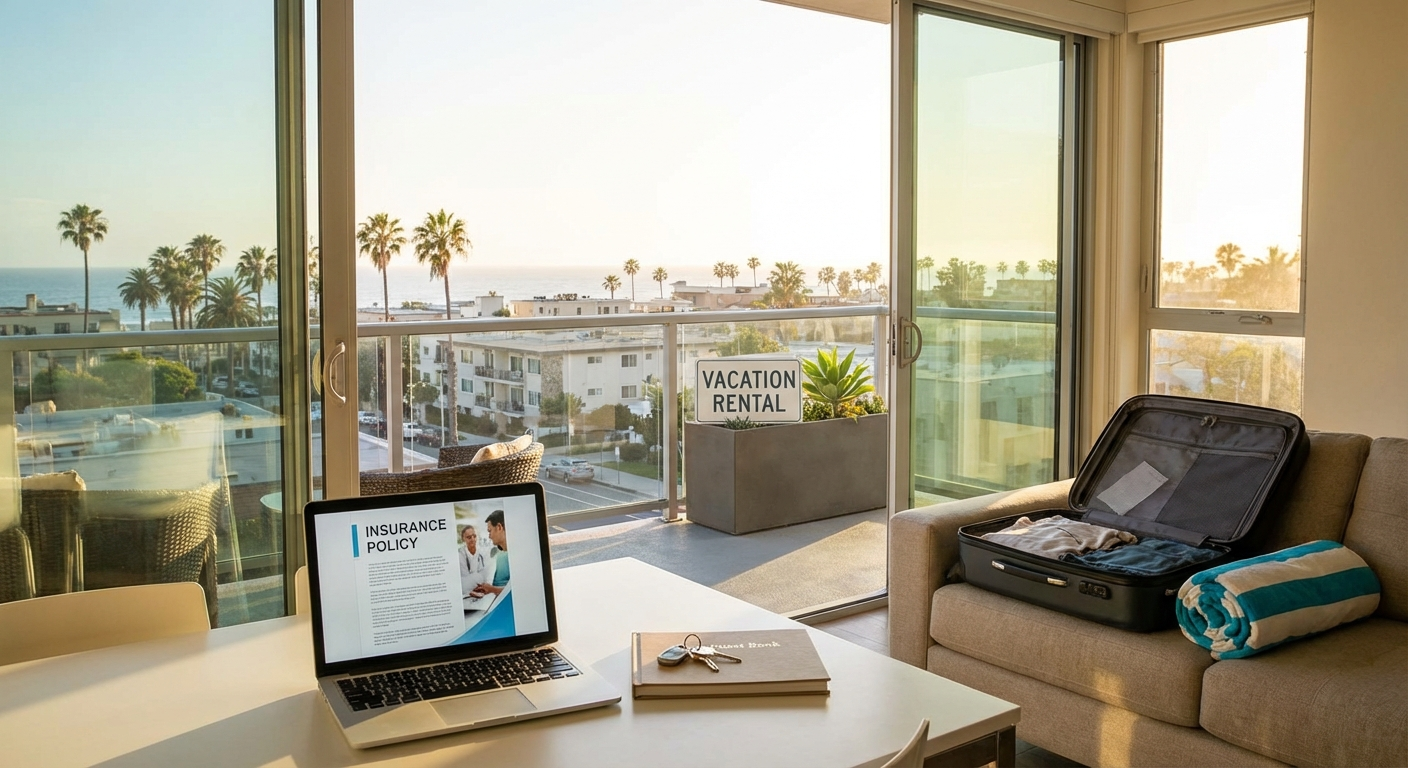
Occasional Rentals vs. Full-Time Business
If you only rent your condo out for a few weeks a year – maybe during Coachella in the Inland Empire or for a couple of big surf competitions down in Ventura County – some insurers might offer an endorsement to your existing HO-6 policy. This “occasional rental” endorsement extends some of your personal coverage to cover those short periods. But here’s the thing: it often has strict limits on how many days you can rent per year, usually 30, 60, or 90 days. Go over that, and you’re back to square one.
But wait – for dedicated short-term rental properties, where the unit is *always* available to guests, you’re looking at a different beast entirely. You’ll likely need a commercial policy, sometimes called a “dwelling fire” policy with a short-term rental endorsement, or a specific “vacation rental” policy. These policies are designed for the risks that come with commercial activity. They include things like:
* Commercial Liability: This protects you if a guest gets hurt on your property and sues. It’s usually much higher than personal liability.
* Loss of Income: If your condo becomes uninhabitable due to a covered loss – say, a pipe bursts and floods the unit, or a small kitchen fire makes it unrentable for months – this coverage helps replace the rental income you lose while repairs are being made.
* Business Personal Property: This covers the furniture, appliances, and other items in your rental unit that are there specifically for the guests.
Many standard carriers like State Farm, Farmers, or AAA have been pulling back from offering any kind of short-term rental coverage in California, especially in areas prone to wildfires. It’s a tricky market right now, and finding a carrier willing to take on the risk can be a challenge. That’s where working with an independent agency really helps.
The California Insurance Quagmire: Why It’s Even Harder Now
Let’s be blunt: California’s insurance market is in a rough spot. Premiums for all property insurance have jumped, sometimes 40% or more between 2022 and 2024. Major insurers are either leaving the state or severely restricting new policies. The rising costs of natural disasters – wildfires like the ones predicted for the 2025 LA fire season, mudslides, and even just the general cost of repairs – make insurers very wary.
For short-term rentals, this problem is amplified. Insurers view them as inherently riskier. More foot traffic, less personal oversight, and the potential for larger liability claims just makes them less attractive in an already difficult market. You might find yourself having to go through the California FAIR Plan for your basic dwelling coverage, then layering on a separate policy for liability and loss of income. It’s not ideal, but it’s sometimes the only option.
This is why you don’t want to just call up a single insurance company. You need someone who knows the California market inside and out, someone who can shop around. Karl Susman of Condo Insurance California, CA License #OB75129, has been helping Californians find the right coverage for years. He understands the complexities of the current market and can help you sort through the options. You can reach his team at (877) 411-5200 to get started.
HOA Policies: What They Cover, What They Don’t
Many condo owners assume their Homeowners Association (HOA) master policy provides some safety net for their short-term rental. Not always.
Your HOA’s master policy typically covers the building’s exterior, common areas – like the gym, pool, or hallways – and the structure of your individual unit up to the “bare walls.” It protects the association from liability claims related to those common areas.
However, it almost never covers:
* Your personal belongings inside your unit.
* Your liability for incidents *within* your unit.
* Loss of rental income.
* Specific damages caused by your guests to your unit’s interior.
If a guest causes a fire that burns down your unit, the HOA’s policy might cover rebuilding the structure, but it won’t cover your furniture, your lost income, or your personal liability if that guest sues *you*. You still need your own policy – and a specialized one for short-term rentals – to fill those gaps.
But What About Airbnb’s Host Guarantee?
Airbnb, VRBO, and other platforms offer some level of “host protection” or “guarantee.” This often leads owners to believe they don’t need additional insurance. That’s a mistake. These programs are not insurance policies. They have caps, exclusions, and specific terms that can leave you exposed. They might cover damage to your property by a guest, but they often don’t cover liability claims for injuries, or they have very low limits compared to a proper insurance policy.
Think of them as a nice bonus, a first line of defense perhaps, but never a replacement for real insurance. Relying solely on them is like bringing a spoon to a knife fight.
The Price Tag: Expect to Pay More
Let’s be honest about the cost. Short-term rental insurance will be more expensive than your personal HO-6 policy. Why? Because the risks are higher. You’re operating a business. More people coming and going means more chances for accidents, damage, or even theft.
The exact cost varies wildly based on your location – a condo in a high-fire risk area of Malibu will cost more to insure than one in the heart of San Francisco – the size of your unit, the amount of coverage you choose, and your claims history. Don’t be surprised if your premiums are double or triple what you’d pay for a personal policy. It’s the cost of doing business, and it’s a necessary one.
Some insurers might even require specific safety features, like smart locks, smoke detectors, or carbon monoxide detectors, especially if you’re trying to get coverage in areas like Lake Tahoe or parts of the Valley where seasonal rentals are popular.
Before you even list your condo, you need to factor this insurance cost into your business plan. It’s not an optional expense; it’s foundational. If you’re ready to get a clear picture of what this might look like for your California condo, you should talk to an expert. You can start the process of getting a specialized quote right here: Get a Quote.
Final Considerations: Local Rules and Regulations
Beyond insurance, don’t forget that many California cities have strict rules about short-term rentals. San Diego, Santa Monica, and even smaller towns have enacted ordinances regarding permits, occupancy limits, and even outright bans in certain zones. Some HOAs also prohibit short-term rentals entirely. Violating these rules can lead to hefty fines, legal battles, and even a forced sale of your property. Always check local laws and your HOA’s CC&Rs before you even think about renting out your place. Insurance is just one piece of the puzzle.
When you’re dealing with something as complex as short-term rental insurance in California, trying to figure it out alone is a recipe for stress. Getting professional advice is smart. Karl Susman and the team at Condo Insurance California, CA License #OB75129, are well-versed in these kinds of policies. They can help you understand the nuances and find a solution that fits your specific situation. Give them a call at (877) 411-5200.
FAQ: Your Quick Questions Answered
Q: My HOA says short-term rentals are okay. Does that mean my regular condo insurance will cover it?
A: Not necessarily. Your HOA’s permission usually relates to their rules, not your personal insurance coverage. You still need to ensure your personal policy has the correct endorsements or is a specialized short-term rental policy.
Q: What’s the biggest risk of not having proper short-term rental insurance?
A: The biggest risk is liability. If a guest gets seriously injured on your property and sues, you could face massive legal fees and damages that aren’t covered, potentially wiping out your savings or forcing you to sell assets.
Q: Can I just get an umbrella policy to cover the extra liability?
A: An umbrella policy is a great idea for extra liability, but it usually requires you to have a foundational primary policy. If your primary condo policy excludes business activities, the umbrella policy likely won’t “drop down” to cover that excluded risk either. You still need proper primary coverage for the rental activity.
Q: How long does it take to get a quote for short-term rental insurance?
A: It can vary. Because it’s a specialized product, it might take a bit longer than a standard HO-6 quote. Providing all the details about your property and rental frequency upfront will speed up the process. It’s worth the wait to get it right.
Q: Are earthquake and flood risks covered in a short-term rental policy?
A: Generally, no. Like standard policies, earthquake and flood coverage are usually separate policies or endorsements even for short-term rentals. California earthquake insurance is almost always a standalone product.
This article is for informational purposes only and does not constitute financial advice.