What You’ll Learn:
- Why insuring a historic California condo is different from a modern one.
- How to figure out what your HOA’s master policy actually covers.
- The specific risks and repair challenges that drive up costs for older buildings.
- Exactly what your personal HO-6 policy should include to protect your investment.
- Tips for finding the right insurance and managing your premiums.
Why Historic California Condos Are Different
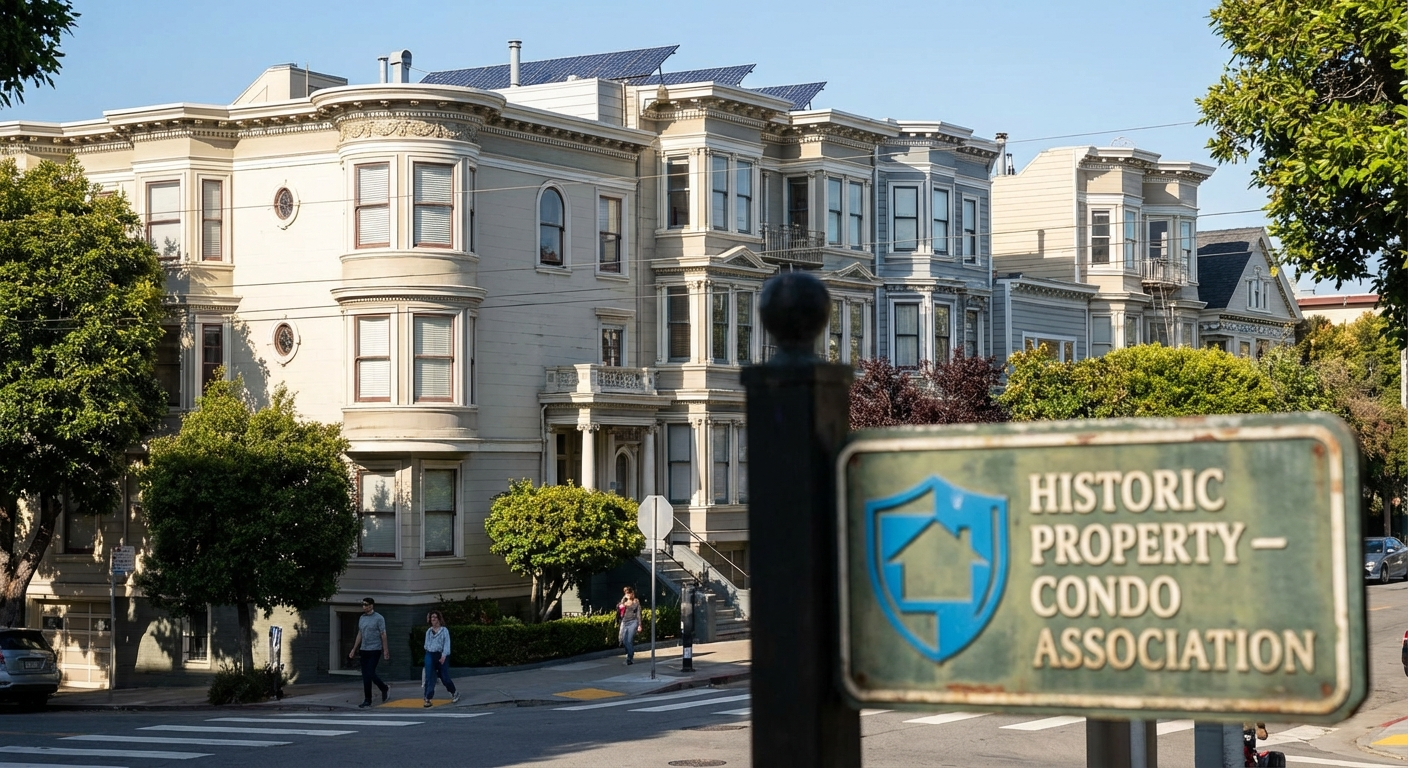
There’s something undeniably special about living in a historic building. Maybe it’s the character of a 1920s Spanish Revival in Pasadena, the grandeur of a Victorian conversion in San Francisco’s Nob Hill, or a beautifully preserved Art Deco gem downtown in Los Angeles. These aren’t just condos; they’re pieces of California history. They offer charm, unique architecture, and a sense of connection to the past.
But here’s the thing. That very charm, that historic character, often makes insuring them a trickier, more expensive business than a run-of-the-mill new build in the Inland Empire. Insurers see these properties differently. They calculate risk based on age, materials, and how well the building has been maintained. You’re not just buying a home; you’re buying into a unique set of insurance challenges, too.
Step 1: Understand Your HOA’s Master Policy
Every condo owner knows the HOA has a master insurance policy. It covers the building itself, the common areas—the roof, the foundation, the hallways. But what it covers *inside* your unit? That’s where it gets interesting.
What is “Walls-In” vs. “All-In”?
The short answer is yes, you need your own policy. The real answer is more complicated. HOAs typically have one of two types of master policies: “bare walls-in” or “all-in.”
A “bare walls-in” policy, sometimes called “walls-out,” covers just the structural shell of your unit. Think of it: the drywall, the plumbing pipes behind the wall, the basic electrical wiring. Anything you’ve added or improved—your granite countertops, the hardwood floors, that custom bathroom remodel—isn’t covered by the HOA. That’s on you. Many older, smaller HOAs in places like Santa Monica or Oakland tend to have these more basic policies.
An “all-in” policy, on the other hand, covers more. It might include standard fixtures, appliances, and even some interior finishes. But even with an “all-in” policy, personal property like your furniture, clothing, and electronics are *never* covered. Nor are any upgrades you’ve made beyond the original builder-grade finishes. So, if your HOA’s policy covers the standard kitchen, but you put in a gourmet one, that difference is still your responsibility.
Before you do anything else, get a copy of your HOA’s master policy. Read it. Understand it. If you don’t, you won’t know where your coverage gaps are. And believe me, there are almost always gaps.
Step 2: The Special Challenges of Historic Building Insurance
Insuring an old building isn’t just about the structure; it’s about the unique risks and the cost of fixing them. Think about a beautiful old building in downtown Sacramento, for example. What makes it special also makes it a headache for insurers.
Construction Materials and Repair Costs
Modern buildings use standard, easily sourced materials. Historic buildings? Not so much. Imagine an ornate plaster ceiling damaged by a burst pipe. You can’t just call any drywall guy. You need a specialist, someone who understands historic preservation. The same goes for original wood flooring, custom millwork, or unique tile patterns. These materials are often rare, expensive, and require skilled artisans to repair or replace them properly.
That’s not the whole story. When you repair or rebuild a historic structure, you often trigger modern building codes. An old electrical system might be fine until a fire requires a full rewire. Then, suddenly, you’re looking at bringing everything up to 21st-century code, which costs significantly more than just fixing what was there. This “ordinance or law” coverage is absolutely essential for historic properties.
Higher Fire and Earthquake Risks
Older buildings, by their nature, can carry higher risks. Original wiring, while charming, might not meet today’s fire safety standards. They might lack modern sprinkler systems. This makes them more prone to fire damage, and insurers know it.
Which brings up something most people miss. California sits on active fault lines. From the Bay Area down through Ventura County and beyond, seismic activity is a constant concern. Many historic buildings weren’t built with modern seismic retrofitting in mind. While some have been upgraded, others haven’t. An earthquake could cause significantly more damage to an older, unreinforced masonry building than a newer, seismically engineered one. Premiums reflect this.
The “Fair Plan” and Limited Options
Because of these higher risks, some mainstream insurers—think State Farm, AAA, or Farmers—might be hesitant to offer coverage for historic buildings. They might even pull back from certain areas entirely, especially after big events like the 2025 LA fires. When that happens, you might find yourself looking at the California FAIR Plan.
The FAIR Plan is California’s “insurer of last resort.” It provides basic fire coverage when private insurers won’t. But it’s often more expensive and offers less comprehensive coverage. It’s not designed to be your first choice. It’s a safety net, but it’s a tight one. And remember, Prop 103, while designed to protect consumers, also dictates how insurers can set rates, sometimes limiting their willingness to take on very high-risk properties.
Step 3: What Your Personal HO-6 Policy Needs
Your HO-6 policy is your personal condo insurance. It fills in the gaps left by your HOA’s master policy. For historic properties, getting this right is even more important.
Dwelling Coverage (Walls-In)
This covers the interior of your unit. If your HOA has a “bare walls-in” policy, you need enough dwelling coverage to rebuild everything inside your unit, including those expensive, period-appropriate finishes. Don’t just guess. Get an estimate for what it would cost to replace your custom kitchen or restore that original crown molding. It’s often more than you think.
Personal Property Coverage
This protects your belongings: furniture, clothes, electronics, art, and jewelry. Historic condos often house unique antiques or valuable collections that complement the building’s character. Make sure you have enough coverage for these items, and consider a “scheduled personal property” endorsement for especially valuable pieces.
Loss of Use (Additional Living Expenses)
If a covered event—say, a fire or a major pipe burst—makes your condo unlivable, this coverage pays for temporary housing, meals, and other extra costs while your unit is being repaired. For historic buildings, repairs can take a long time, sometimes months or even years, due to the specialized nature of the work. You don’t want to be stuck paying rent and your mortgage.
Personal Liability
This is standard but still essential. It protects you if someone is injured in your unit or if you accidentally cause damage to another unit. A guest slips on your antique rug? Your policy helps cover medical bills and legal fees.
Loss Assessment Coverage
This is a big one for older buildings. If the HOA’s master policy isn’t enough to cover a major claim—like a massive repair to the building’s facade or a structural issue—they can levy a “loss assessment” against all unit owners. This coverage helps pay your share of that assessment. For example, if your HOA in a historic DTLA loft building has a $1 million deductible for a major earthquake repair, and there are 100 units, you could be on the hook for $10,000. Loss assessment coverage protects you from that.
Earthquake and Flood Coverage
These are almost always separate policies, and they’re not optional in California. Your standard HO-6 won’t cover earthquake damage. For an older building, especially one without modern retrofitting, earthquake insurance is non-negotiable. The same goes for flood, particularly if your historic building is in a low-lying area or near a river. Don’t assume you’re safe just because you’re not on the coast.
Step 4: Finding the Right Insurer (and Agent)
You wouldn’t ask a general practitioner to perform brain surgery. Similarly, you shouldn’t ask just any insurance agent to find coverage for your historic California condo. Many agents only work with a few carriers, and those carriers might not have an appetite for older, riskier properties.
Some insurers specialize in historic homes or properties with unique characteristics. They understand the costs of specialized repairs and the nuances of older construction. Finding these carriers often requires an independent insurance agent—someone who works with many different companies, not just one.
An experienced agent like Karl Susman of Condo Insurance California (CA License #OB75129) knows the California market inside and out. He understands the challenges of insuring historic properties, from the specific risks in places like the Valley to the complexities of HOA master policies. They can shop around for you, finding insurers willing to cover your unique home and ensuring you get the right blend of coverage. Give Karl a call at (877) 411-5200; it’s worth it.
Ready to get started? Click here to get a personalized quote for your historic California condo.
Step 5: Strategies to Manage Costs
Yes, insuring a historic condo can be more expensive. Premiums jumped 40% between 2022 and 2024 for many California homeowners, and historic properties often see even higher increases. But wait—there are ways to manage those costs.
One common strategy is to choose a higher deductible. If you’re willing to pay more out-of-pocket for a claim, your annual premium will usually go down. Just make sure it’s an amount you can comfortably afford in an emergency.
Safety upgrades can also help. If your building’s HOA has invested in modern fire suppression systems, updated electrical, or seismic retrofitting, insurers often view that favorably. Even individual unit upgrades like smart home security systems can sometimes earn you a discount.
Bundling your policies is another smart move. If you have your car insurance, life insurance, or even another property policy with the same company, they often offer discounts. It’s easier for them, so they pass some savings to you.
Finally, review your coverage regularly. Your needs change, the value of your property changes, and the insurance market certainly changes. Don’t just set it and forget it. A good agent will help you with this, ensuring you’re not over-insured in some areas or dangerously under-insured in others.
Don’t leave your historic home unprotected. Get a quote today and secure your peace of mind.
Frequently Asked Questions About Historic Condo Insurance
Will my rates go up just because my building is designated historic?
Honestly, yes, often. The historic designation itself doesn’t directly raise rates, but the underlying factors that make a building historic—like older, specialized construction materials, unique architectural features, and potentially outdated systems—are what drive up the cost of potential repairs. Insurers price based on risk and replacement cost, and historic properties present higher figures for both.
What if my HOA doesn’t have enough insurance for a major incident?
This is a real worry, especially with older, sometimes underfunded HOAs. If the HOA’s master policy limits are exhausted during a major claim, like a significant earthquake or fire, the remaining costs will likely be passed on to individual unit owners through a “loss assessment.” This is why having robust Loss Assessment coverage on your personal HO-6 policy is absolutely essential for historic condo owners in California.
Do I really need earthquake coverage for an old building?
You absolutely do. Standard condo insurance policies do not cover earthquake damage. For historic buildings, which may not have been built with modern seismic standards or retrofitting, the potential for significant damage is often higher than for newer construction. While the premiums can be higher, the cost of rebuilding after a major quake in a place like the Bay Area or Southern California could be financially devastating without it.
Can I get a discount for updating my historic condo’s systems?
Sometimes. If you or your HOA invest in significant upgrades like new electrical wiring, modern plumbing, or a state-of-the-art fire suppression system, it can reduce the perceived risk for insurers. These improvements demonstrate a commitment to safety and maintenance. Make sure to document all upgrades and discuss them with your insurance agent; they might qualify you for discounts or better rates.
This article is for informational purposes only and does not constitute financial advice.